The Cat, the Caregiver, and the Guilt We Carry

If you know me, you know that I understand reality by analogy.
Just saying, "One plus one equals two," leaves me wanting. Until an idea connects with a personal value, a business lesson, or a family story, it's just data. Fortunately, whenever I'm wrestling with something difficult, life usually hands me another piece of the puzzle from an entirely different direction.
Hard conversations in caregiving are no exception.

So allow me to introduce Missy—my little analogy.
Missy is my fourth cat as an adult, and I wouldn't trade her for the world.
She came to me after a well-meaning owner discovered that life with a kitten was very different from life with a dog. Kittens require socialization, boundaries, engagement, and more patience than many people expect. It wasn't cruelty that brought Missy to my home. It was the honest realization that wanting to do something and being prepared to do it aren't always the same thing.
Early experiences leave their marks.
Missy still prefers sleeping alone because she spent nights shut away in a bathroom. She doesn't communicate like most cats I've known. Some lessons she should have learned as a kitten never quite took hold. But she adapted. I adapted. Somewhere along the way, we learned each other, and we became family.
And I don't think less of the person who first owned her.
Quite the opposite.
I think they recognized something many good people struggle to admit:
Love and qualifications are not always the same thing.
And that's a lesson I wish more dementia caregivers could hear without guilt.
According to the Alzheimer's Association, nearly 13 million Americans provide unpaid dementia care, contributing almost 20 billion hours each year—care valued at more than $446 billion. Yet AARP and the National Alliance for Caregiving report that only about 22 percent of family caregivers receive any formal training.
Think about that.
Millions of loving sons, daughters, husbands, wives, grandchildren, and friends are trying to perform one of the hardest jobs on earth with little preparation.
Because, "Love is all you need," right?
Well, not exactly.
Love is why we show up.
Love is why we sacrifice.
Love is why we keep going.
Love is why we stay involved.
But love doesn't replace sleep.
Love doesn't replace specialized knowledge.
Love doesn't remove fall risks, wandering, medication management, or twenty-four-hour vigilance.
We would never expect love alone to replace surgeons, mechanics, electricians, or pilots.
Yet caregivers routinely convince themselves that love should somehow replace training, support, and rest.
And when they can't do everything, many conclude they have failed.
But perhaps we've confused devotion with isolation.
Perhaps we've confused sacrifice with effectiveness.
Perhaps we've confused being the only caregiver with being a good caregiver.
Never forget that research suggests family involvement remains important regardless of where a loved one receives care. Studies have shown that regular family engagement in assisted living and memory care settings can improve emotional well-being and reduce behavioral symptoms.
Which tells me something important.
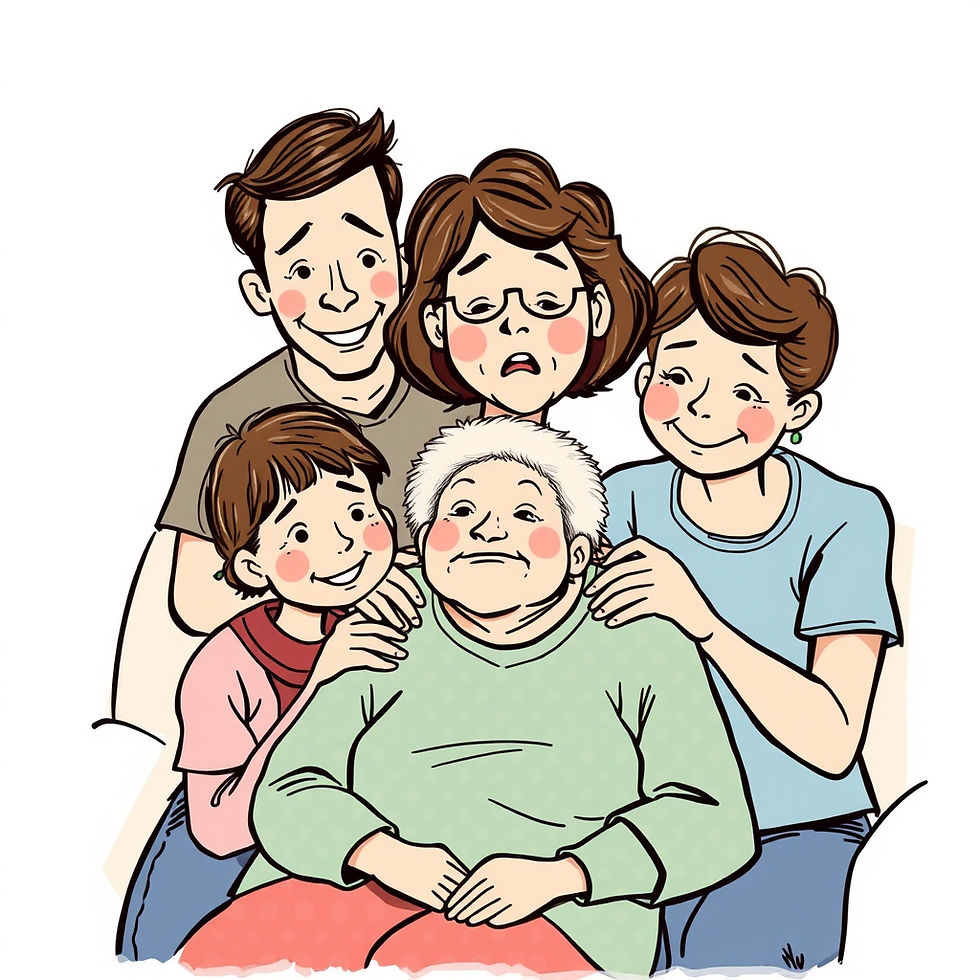
Professional care and family care aren't competitors. They're teammates.
One provides skills, structure, and around-the-clock attention.
The other provides history.
Inside jokes.
Favorite songs.
Birthday stories.
The memory of Dad's first car.
The recipe nobody else can quite duplicate.
The knowledge that somebody still knows who they were long before dementia entered the picture.
The opposite of abandonment isn't doing everything yourself. It's refusing to disappear.
Sometimes that means:
Caring for a loved one at home
Accepting help from siblings
Respite care
Home health
Adult day programs
And yes, sometimes it means assisted living or memory care.
But love doesn't end because the address changes.

Every now and then, Missy surprises me with some tiny affection that lets me know all is right in her world. I don't know if she remembers the confusion of those early months. But I do believe she knows she's safe, she's loved, and she's where she needs to be.
I've come to believe our loved ones deserve that same promise.
Because home isn't always a fixed place.
Sometimes home is simply knowing that the circle of people who care for us can expand, without shrinking anyone's love.
And maybe one of the most loving sentences a caregiver can ever speak isn't, "I can do this all myself."
Maybe it's this:
"I love you too much to do this alone."
Sources
Alzheimer's Association. 2026 Alzheimer's Disease Facts and Figures.
AARP and National Alliance for Caregiving. Caregiving in the U.S. 2025.
Olsen, C., et al. "Quality of Life in People with Dementia in Nursing Homes and Home Care Settings." BMC Geriatrics.
Hayward, J.K., et al. "Family Involvement Interventions in Care Homes for People Living with Dementia." International Journal of Geriatric Psychiatry.


Comments